Cringe Wins, Polish Loses: The Ugly Truth About What TikTok's Algorithm Actually Likes
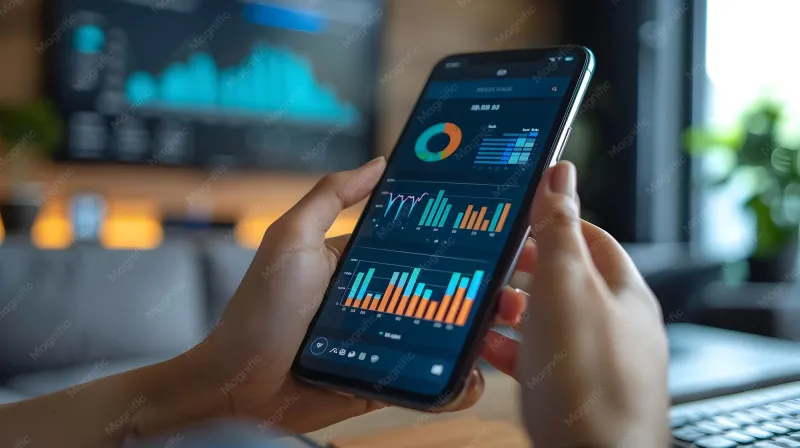
Photo: person looking confused at phone screen with social media analytics chart, via img.freepik.com
Let's set the scene. A creator — let's call her Maya — spends an entire weekend producing a flawlessly edited travel montage. Cinematic B-roll. A trending audio track. Captions timed to the beat. She posts it Sunday night, refreshes obsessively, and watches it crawl to 800 views before dying a quiet, humiliating death.
Meanwhile, a dude named @cheeseboardchris posts a shaky, poorly lit video of himself attempting to make a charcuterie board and failing spectacularly. No transitions. No color grade. Definitely no story arc. It hits 3.7 million views by Tuesday morning.
This is not a fluke. This is the algorithm doing exactly what it was designed to do — and most creators have absolutely no idea what that actually is.
The Myth of the Masterpiece
Here's the thing nobody wants to say out loud at a creator conference: TikTok does not care about your production value. At all. Not even a little bit. The platform's recommendation engine was built to optimize for one thing above everything else — watch time completion. Specifically, what percentage of your video people actually watch, and whether they rewatch it.
A polished 90-second video where 60% of viewers tap out at the 30-second mark is, algorithmically speaking, a disaster. A chaotic 15-second video that people watch three times in a row because they're trying to figure out what just happened? That's gold.
"I used to think the algorithm rewarded quality," says Jordan Lee, a content strategist who has consulted for mid-size creator teams in LA and Chicago. "It took me embarrassingly long to realize it rewards stickiness. Those are completely different things."
Retention Curves: The Stat Nobody Talks About
In TikTok's Creator Center analytics, there's a graph most people glance at and ignore: the retention curve. It shows exactly where viewers drop off during your video. And according to multiple data analysts who've studied thousands of videos across niches, that curve is the closest thing to a cheat code the platform offers.
The algorithm reportedly evaluates content in rapid waves. In the first push, your video gets served to a small test audience — maybe a few hundred people. If the retention curve stays high (meaning people aren't bailing), TikTok widens the distribution. If engagement velocity — the speed at which likes, comments, and shares come in relative to views — also spikes early, the video gets another boost. This feedback loop happens fast. Like, within the first hour fast.
This is why some mediocre videos explode: they accidentally nail the first few seconds. A weird visual hook. An unfinished sentence. A reaction that makes you need to know what happens next. Meanwhile, beautifully produced videos often front-load context and setup — exactly the kind of patient storytelling that sends people scrolling before the good stuff even starts.
"The algorithm doesn't know your video is good," says data analyst Priya Nath, who runs a TikTok analytics newsletter with over 40,000 subscribers. "It only knows that people stopped scrolling. That's the entire conversation it's having with your content."
The Creators Who Figured It Out (By Accident)
Talk to enough creators and you start hearing the same story. They posted something lazy — a rant filmed in their bathroom, a reaction video they almost didn't upload, a clip they thought was too rough to share — and it went sideways viral. Then they went back to their "good" content and wondered why the same magic never happened.
Tamika Rhodes, a beauty creator based in Atlanta with around 280,000 followers, describes the moment she stopped trying as the moment her career actually started. "I posted this video where I literally forgot I was filming and started arguing with my sister off-camera. The lighting was terrible. I had a half-done eyebrow. It got 900,000 views. My most edited tutorial ever got 12,000."
What Tamika had accidentally discovered is what some creators now deliberately engineer: manufactured imperfection. Intentional pauses. Slightly unsteady camera work. A "wait, hold on" mid-video that resets viewer attention. It sounds cynical when you say it out loud, but it works because it mimics the unpredictability of real life — and real life, it turns out, is extremely watchable.
Engagement Velocity: The Secret Sauce You Can't Buy
Beyond retention, there's another factor that separates algorithmic favorites from well-produced flops: the speed of early engagement. TikTok reportedly weights the first 15-30 minutes of a video's performance heavily in determining whether it gets pushed to broader audiences.
This is why posting time still matters, even in 2024. Drop a video when your core audience is asleep, and even great content can get trapped in a low-engagement window that tanks its distribution permanently. The algorithm sees slow early traction and essentially marks the video as uninteresting — and it rarely reverses that judgment.
Creators who've reverse-engineered this often treat their comment sections like a performance. Replying fast. Posting something slightly controversial or incomplete to bait responses. Asking a question in the caption that practically demands an answer. It's not manipulation so much as it's understanding that TikTok's recommendation engine is essentially a very impatient judge who makes up its mind in the first few minutes.
So Should You Just Stop Trying?
Not exactly. The takeaway here isn't "film everything on a potato and hope for the best." It's more nuanced than that. The creators who consistently perform well aren't abandoning quality — they're redefining it.
Quality, in TikTok terms, means hooking someone in the first two seconds. It means pacing that doesn't give viewers a single comfortable moment to scroll away. It means understanding that a retention curve that drops at the 8-second mark is a bigger problem than shaky footage or imperfect audio.
The algorithm, in other words, has its own aesthetic. And it's not the one they taught in film school.
Maya, by the way, eventually cracked it. She started posting rougher cuts, leaned into her unscripted moments, and stopped color-grading everything to death. Her last video hit 1.2 million views. She filmed it in her car, eating a sandwich.
Scroll. Vibe. Repeat.