Dear Algorithm, Please See Me: The Creators Who Treat Their FYP Like a Pen Pal
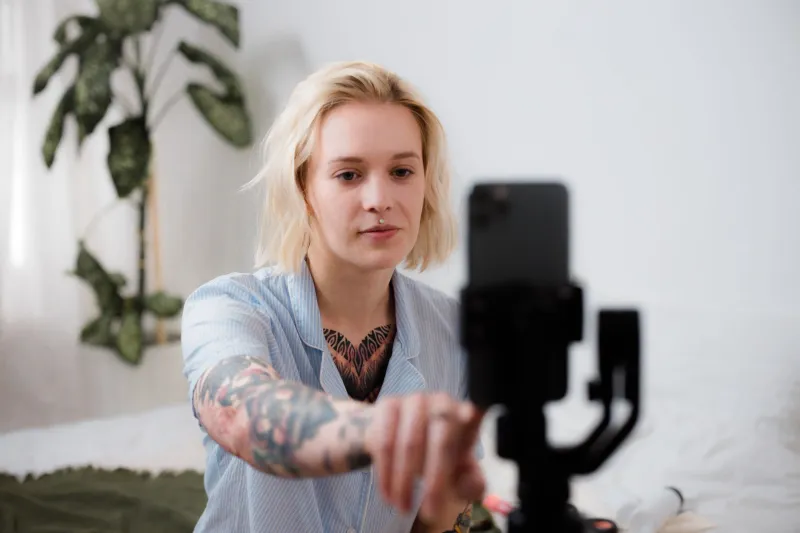
Somewhere in Columbus, Ohio, a 24-year-old content creator named Jaylen spends fifteen minutes before every post doing what he calls his "pre-flight checklist." He reviews his hook. He adjusts his caption. He checks the time against a spreadsheet he built himself over eighteen months of obsessive data collection. Then — and this is the part he only recently admitted on a podcast — he whispers, out loud, to his phone: "Okay. Do your thing."
He is not alone.
Across TikTok's creator community, a genuinely fascinating cultural phenomenon has quietly taken root: millions of people have developed what can only be described as a relationship with an algorithm. Not a transactional one. A relationship relationship. The kind with rituals, superstitions, inside jokes, and occasional screaming matches at 2 a.m. when a video tanks for no discernible reason.
The For You Page — that glorious, chaotic, weirdly accurate scroll of content TikTok serves every user — has become something creators talk about like it has feelings. And the lengths they go to in order to be seen by it? Genuinely unhinged. Genuinely understandable. Possibly both.
The FYP Is Basically a Person Now, Sorry
Here's the thing about TikTok's recommendation engine that makes it uniquely prone to this kind of anthropomorphization: it's good. Eerily good. The kind of good where you watch three videos about sourdough at 11 p.m. and by morning your entire feed has pivoted to cottage-core baking content you didn't know you needed.
When something responds to you that precisely, your brain starts treating it like a listener. A very attentive, very unpredictable listener who sometimes ignores you completely and sometimes amplifies your voice to three million strangers without warning.
"I've had full conversations with my analytics page," admits Maya, a lifestyle creator based in Atlanta with around 280,000 followers. "I'll be like, 'Why did you love that video? What did I do right? What are you trying to tell me?' And then I'll spend two hours trying to reverse-engineer the answer."
This is the core of the phenomenon: creators aren't just posting content and hoping for the best. They're attempting to decode a language. To have a dialogue. To, in some cases, negotiate.
The Rituals Are Getting Specific
Ask any mid-to-large TikTok creator about their posting habits and you'll quickly discover that "just upload and see" is not a vibe anyone is operating on anymore. The rituals range from the scientifically adjacent to the deeply, lovably superstitious.
On the strategic end, you have creators who've built elaborate systems around posting windows — not just "post when your audience is online" but granular stuff, like avoiding uploads on Tuesday afternoons because one creator's analytics showed consistent drops, or always going live within an hour of posting because the algorithm supposedly rewards accounts that use multiple features simultaneously. Some creators swear by posting three videos in quick succession to "wake up" their account after a slow stretch, a tactic known in some corners of creator Twitter as "the reset."
Then there's the hashtag conversation. Oh, the hashtag conversation. The prevailing theory — debated constantly, never fully resolved — is that hashtags aren't just for discovery, they're signals. You're not tagging #BookTok because you want BookTok users to find you. You're tagging it because you're telling the algorithm what room to put you in. Creators talk about this with the gravity of people filing legal documents.
"I think of hashtags like addressing a letter," says Derek, a book reviewer in Chicago with a remarkably dedicated following of 90,000. "You're not writing to your audience. You're writing the address on the envelope so the algorithm knows where to deliver it."
On the more mystical end of the spectrum, you've got creators who consult moon phases before posting emotional content, refuse to upload anything on Mercury retrograde (yes, really), and maintain strict rules about never checking analytics in the first hour because — and this is a direct quote from a Discord server dedicated to TikTok growth — "you don't want to panic-energy the video."
Panic-energy the video. We're living in incredible times.
Does Any of This Actually Work?
Here's where it gets genuinely interesting rather than just entertaining: some of it does. Not the moon phases, probably. But the underlying instinct — that the algorithm can be communicated with through consistent behavioral patterns — is not entirely wrong.
TikTok's system does learn from creator behavior over time. Accounts that post consistently in a niche, use similar audio patterns, and maintain steady engagement windows do tend to get more reliable distribution. The algorithm isn't sentient, but it is pattern-matching at a scale humans can barely conceptualize. When creators develop rituals around consistency and intentionality, they're accidentally doing the right thing for the right (if slightly delusional) reasons.
The placebo effect matters too. Creators who believe they have a system post with more confidence. More confidence often translates to better on-camera energy. Better energy drives watch time. Watch time is the thing the algorithm actually cares about most. So the ritual creates the outcome, just through a completely different mechanism than the creator thinks.
Spooky? A little. Effective? Weirdly, yes.
The Breakup Phase Is Real
Of course, every relationship has rough patches. And nothing breaks a creator's heart quite like posting what they know is their best work — properly hashtagged, optimally timed, hook perfected, panic-energy carefully avoided — and watching it flatline at 300 views.
"It feels like getting ghosted," says Maya, with the exhausted candor of someone who has been through this many times. "You did everything right. You showed up. And it just... didn't see you."
This is when the relationship metaphor really earns its keep. Creators describe algorithm slumps in the vocabulary of personal rejection: feeling invisible, feeling like they've been replaced, wondering what they did wrong, bargaining through new content styles to win back favor. The emotional weight is real even when the logic is fuzzy.
Some creators respond by doubling down on their rituals. Others go through what the community calls a "purge" — deleting underperforming videos, wiping their niche, starting over. A few just log off for a week and return to find the algorithm has, mysteriously, missed them.
The Bigger Picture
What makes this whole phenomenon so OvidTik-core is that it's not really about TikTok. It's about humans doing what humans have always done: finding patterns in chaos, building relationships with systems they can't fully control, and developing rituals that make uncertainty feel manageable.
People pray to weather gods. They knock on wood. They whisper to their phones before uploading a video about their morning routine.
The medium is new. The impulse is ancient.
And if the algorithm ever does become sentient, at least it'll know we were trying to connect all along.