Post Now vs. Wait Three Days: The TikTok Timing Debate That's Splitting Creators in Half
Imagine finishing the most perfect TikTok of your life. The lighting is immaculate. The audio sync is frame-perfect. You nailed the transition on the first try, which has literally never happened before. Every instinct in your body is screaming post it right now.
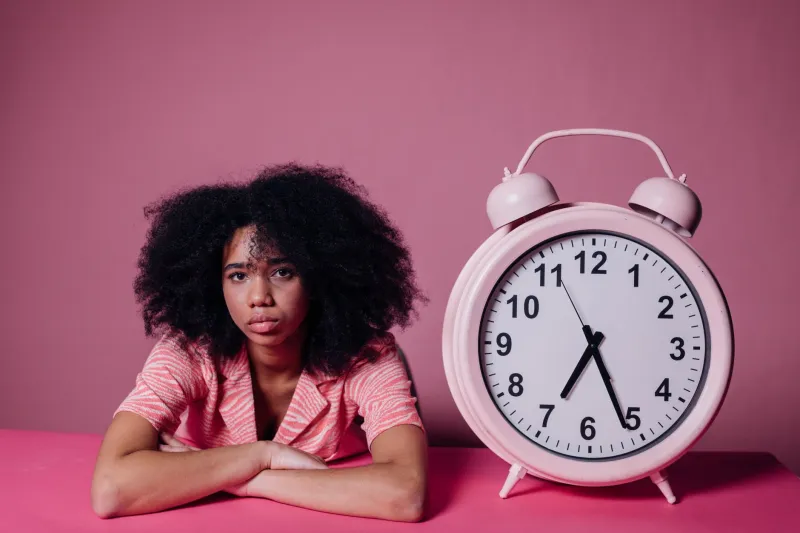
But a growing tribe of creators — some with follower counts that would make your eyes water — says you should close the app, put your phone down, and wait exactly 72 hours before you touch that upload button.
Wild? Sure. Crazy enough to be true? According to a surprising number of data points, maybe absolutely yes.
Where This Theory Even Came From
The 72-hour rule didn't emerge from TikTok's engineering team or some leaked internal document. It bubbled up organically from creator forums, Discord servers, and the kind of late-night "wait, has anyone else noticed this?" threads that spawn half of the internet's best conspiracy theories.
The basic claim goes like this: when you film a video and immediately post it, TikTok's algorithm evaluates it against your current audience activity patterns — which may or may not be in sync with peak engagement windows. But if you wait roughly three days, you've allowed your audience's weekly rhythm to reset, meaning your video lands when more of your followers are actually online, bored, and doom-scrolling with intention.
Does that sound like something a person made up at 2 a.m.? Completely. Does it also kind of make behavioral sense? Uncomfortably, yes.
The Algorithm Doesn't Care About Your Schedule (But Your Audience Does)
Here's the thing TikTok will never officially confirm but creators have basically reverse-engineered through obsessive testing: the platform's algorithm doesn't just measure how many people engage with your video. It measures the velocity of that engagement in the first hour or two after posting.
If your video goes up at 11 p.m. on a Tuesday when your core audience is asleep, that initial engagement window is basically dead on arrival. The algorithm sees sluggish early numbers, assumes the content is mediocre, and throttles distribution before your actual fans even wake up. Your masterpiece never gets its moment.
The 72-hour theory essentially argues that waiting gives creators a better shot at choosing when that critical first-hour window opens — and that three days is roughly the time it takes to identify a genuinely good upcoming window based on your personal analytics.
Creators who swear by this method aren't just waiting blindly. They're pulling up their TikTok analytics, checking which days their followers are most active, and timing the drop with almost surgical precision. The three-day window just happens to be long enough to gather that data and pick your moment.
Real Creators, Real (Anecdotal) Results
Ok yes, "anecdotal" is doing some heavy lifting here. TikTok hasn't handed anyone a study. But the creator testimonials are stacking up in ways that are hard to ignore.
Lifestyle creators in the 200K–800K follower range have reported consistently stronger reach on videos they sat on for two to four days compared to same-quality content they posted immediately. A cooking creator who documents the experiment informally noted that her "patient posts" averaged nearly double the views of her impulse uploads over a three-month stretch. A comedy creator in the mid-tier range described the 72-hour rule as "the most boring thing that has ever improved my career."
None of this is peer-reviewed data. All of it is the kind of ground-level pattern recognition that, historically, tends to be directionally correct even when it can't be precisely explained.
The Psychology Angle Nobody's Talking About
Here's where it gets genuinely interesting: even if the algorithmic logic is partially myth, the 72-hour rule might still work for a completely different reason — and that reason is the creator's own head.
When you post immediately after filming, you're operating on adrenaline. You haven't watched the video back with fresh eyes. You haven't questioned whether the hook is actually as strong as you thought. You post it, then spend the next six hours refreshing your notifications in a spiral of anxiety that no therapist would endorse.
Waiting three days forces a cooling-off period. Creators who practice it consistently report that they edit more thoughtfully during the delay, catch weak hooks they would have missed, and approach the actual post with less emotional chaos. Less chaos often means better decisions about captions, sounds, and posting times — all of which genuinely affect performance.
So maybe the 72-hour rule is less about tricking the algorithm and more about tricking yourself into being a calmer, more strategic creator. Which, honestly, tracks.
When Waiting Is Actively the Wrong Move
Before you schedule everything three days out and call it a strategy, pump the brakes. The 72-hour rule has one massive, glaring exception: trends.
TikTok trends have the shelf life of gas station sushi. A sound that's dominating the FYP on Monday is nostalgic by Thursday. If you film a trend-based video and wait 72 hours to post it, you will arrive to a party that has already been cleaned up, the guests have gone home, and someone is vacuuming the carpet.
Top creators are pretty clear about this distinction. The 72-hour rule applies to original content — original concepts, personal storytelling, educational content, anything that isn't riding a specific trending audio or format. For trend-responsive content, the rule is post immediately or post never.
Knowing which category your video falls into before you film it is, arguably, the actual skill here.
So Is It Real or Is It Lore?
Honest answer: it's probably both, and that's not as unsatisfying as it sounds.
There's enough behavioral logic — audience rhythm, engagement velocity, creator psychology — to suggest the 72-hour window has genuine merit for non-trend content. There's also enough unpredictability baked into TikTok's algorithm that no single timing rule will save a video with a weak hook, bad audio, or zero reason for anyone to watch past the three-second mark.
The creators winning with this strategy aren't winning because they waited. They're winning because waiting forced them to be more intentional about everything else.
Timing matters. Content quality matters more. Knowing the difference between a trend video and an original video matters most.
But also — maybe just try waiting 72 hours on your next post and see what happens. Worst case, you spent three days not refreshing your analytics every four minutes, and honestly? That's a win for your mental health regardless of what the algorithm does.
Scroll. Vibe. Repeat. But maybe, like, in three days.