Your Video Slapped and Got 47 Views. Your Friend Posted a Potato and Got 2 Million. Here's Why.
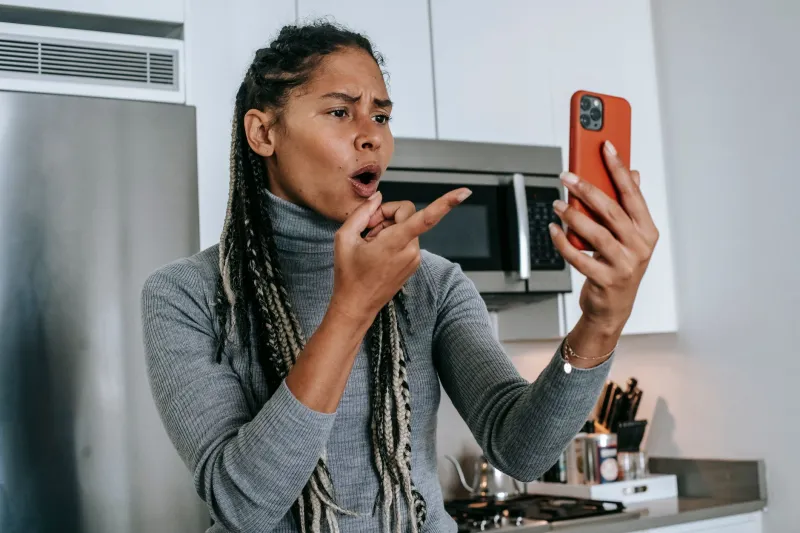
Let's set the scene. You've been working on a TikTok for the better part of a Tuesday evening. The lighting is chef's kiss. The audio sync is frame-perfect. You even did the thing where you zoom in at exactly the right moment. You post it, refresh the app seventeen times in the next four minutes, and watch the view count climb to... 61. Then it stalls. Then it dies.
Meanwhile, your friend — the one who doesn't even know what a ring light is — films herself eating cereal in her car with the camera slightly tilted, uploads it with zero hashtags, and wakes up to 1.8 million views and a brand deal inquiry from a granola company.
Congratulations. You've just experienced the most humbling phenomenon in modern content creation: the algorithm flexing on your effort.
It's Not What You Made. It's Who Made It.
Here's the part that stings: TikTok's algorithm doesn't actually care how good your video is — at least not right away. Before your content gets evaluated on its merits, it gets evaluated on you. Specifically, your account's historical performance data.
Account age matters in ways creators almost never talk about. A profile that's been active for two years, posting semi-regularly, has a trust score baked into the system. TikTok's algorithm has a sample size. It knows roughly what kind of engagement to expect from that account. A newer account, or one that posts sporadically, gets treated like a stranger at a party — technically allowed in, but not getting the good appetizers yet.
So your friend's boring cereal video didn't win because it was good. It won because her account had been quietly accumulating credibility for months while you were busy crafting your masterpiece once every three weeks.
The Velocity Problem Nobody Talks About
Engagement velocity is the sneaky metric that separates the viral from the void, and it has almost nothing to do with total likes. What TikTok is actually measuring in those critical first 20-30 minutes after you post is the rate at which people are interacting — not the raw number.
A video that gets 200 likes in the first 15 minutes signals something very different than a video that gets 200 likes over four hours. The first one looks like a rocket launch. The second one looks like a slow Tuesday. The algorithm responds accordingly, pushing the fast mover to wider audiences and essentially putting the slow burner on a shelf.
This is why some creators swear by posting when their specific audience is most active — and why "post at 7pm EST" advice is both partly true and wildly oversimplified. The real goal isn't just catching eyeballs; it's catching eyeballs that will immediately smash that heart button, leave a comment, or — the holy grail — send the video to someone else.
Your perfectly edited video posted at 2am? It's getting evaluated against a ghost town. Your friend's cereal chaos posted during peak scroll hours? It hit a crowd that was already in a tapping mood.
Consistency Is the Cheat Code Everyone Ignores
Posting consistently is so boring to talk about that most creators gloss over it in favor of discussing hook strategies and trending sounds. But here's the uncomfortable truth: the algorithm rewards accounts that show up like clockwork, even if what they're showing up with is objectively mid.
TikTok's system is essentially trying to predict what will keep people on the app longer. An account that posts three times a week, every week, is a reliable content machine. The algorithm has learned to trust it. An account that posts one incredible video a month gives the system nothing to work with. It can't build a pattern. It can't predict. So it hedges its bets and limits the reach.
Your friend probably doesn't think of herself as a "consistent creator." She just posts whenever something mildly funny happens to her. But that low-stakes, frequent posting is accidentally one of the most effective algorithmic strategies in existence.
The Comment Section Is Doing More Work Than Your Caption
Here's a wild one: the text people write about your video can influence its distribution almost as much as the video itself. TikTok's algorithm processes comment sentiment and keyword patterns. A comment section full of people arguing, quoting lines from the video, or tagging friends is a massive green flag. It signals that the content sparked something — a reaction, a conversation, a moment of recognition.
Your highly produced video might get comments like "nice" and "wow great editing." Polite. Quiet. Dead.
Your friend's cereal video probably got forty people saying "why does this describe my whole life" and another twenty tagging their roommates. That's engagement texture — and TikTok reads it like a bestseller.
The practical takeaway is almost annoying: sometimes content that provokes a relatable reaction, a mild controversy, or a collective "wait, same" will outperform technically superior content because it generates the kind of comments that look like community, not applause.
The Rewatch Loop: The Secret Metric Hiding in Plain Sight
TikTok has never officially confirmed exactly how much weight it gives to video completion rate and rewatch behavior, but creators who've studied their analytics obsessively will tell you: it matters enormously.
A video that people watch once and scroll past is fine. A video that people watch twice — or three times — because something in it didn't quite register, or because it was funny enough to deserve a rerun, is algorithmically golden. Short, punchy videos with a payoff in the last two seconds are designed to exploit this. Your friend's dog sneezing at the exact right moment? People rewatched it four times trying to catch the sneeze buildup. That's four times the watch time from one viewer.
Your three-minute cinematic masterpiece, however gorgeous, probably got watched to about the 40-second mark before the scroll reflex kicked in. Completion rate: 22%. Rewatch rate: basically zero. The algorithm shrugged.
So What Do You Actually Do With This Information?
The good news is that none of this means quality is pointless. It means quality alone isn't the ticket. The creators consistently cracking the For You Page aren't just talented — they're also showing up frequently, posting at the right times for their specific audiences, engineering comment bait into their content, and keeping videos tight enough to get rewatched.
The algorithm isn't punishing your effort. It's rewarding a very specific combination of behaviors that, once you understand them, stop feeling random and start feeling like a system you can actually work with.
Your friend will probably post that cereal video, ride the wave for a week, then go quiet for two months and wonder why her next video got 300 views. Because the algorithm giveth and the algorithm taketh away — especially from people who don't know why they went viral in the first place.
You, on the other hand, now know the rules. Use them.